Saturday, May 19, 2007

OK, so it's been a while...


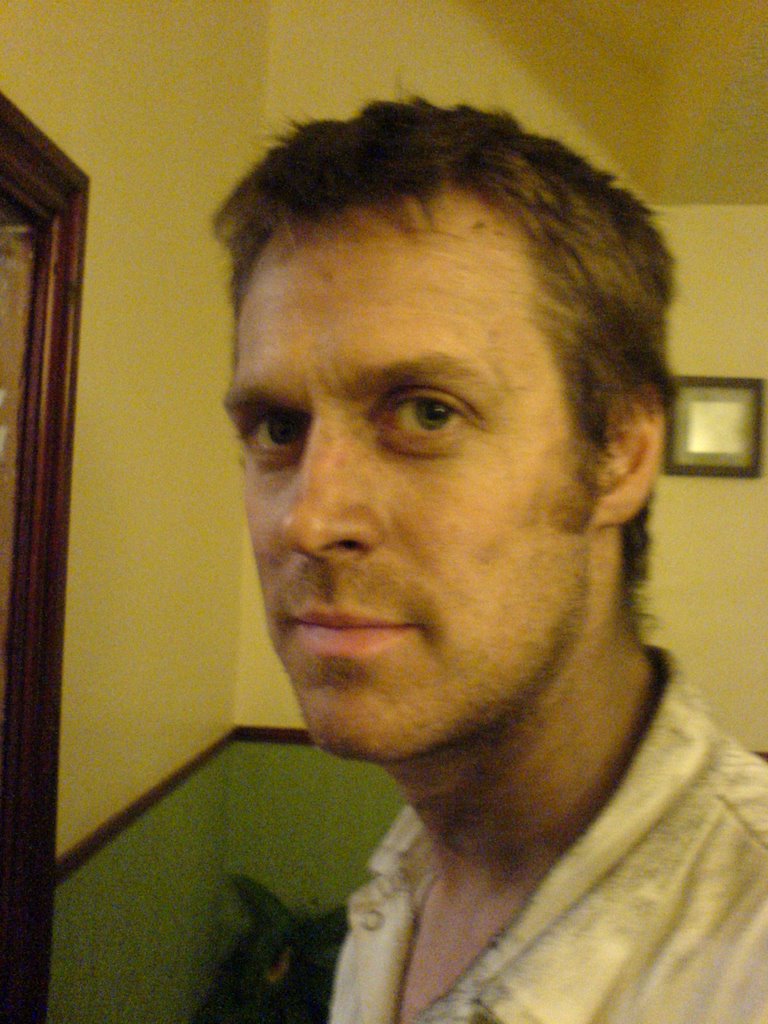
Meet William John, born on 15th December '06.
He's cool.

Tuesday, May 16, 2006

George Blush

Just in case anyone hasn't already seen it (it's been number 1 in the google video Top 100 for a couple of weeks at least). This has to be one of the most audacious and brilliant pieces of satirical comedy I've seen in a long time, if a little cruel. I hadn't heard of Stephen Colbert before this, although I have watched and enjoyed the Daily Show with Jon Stewart. I'm not sure how this was allowed to happen. I actually almost felt sorry for George Bush having to sit through it, I guess he has to get some credit for actually being there, and for shaking Colbert's hand at the end (and for doing this earlier on in the evening). I'm not sure what the Whitehouse Correspondents' dinner is all about, but I understand that the speakers usually have a bit of a pop at the administration and the media in equal measure. I think Colbert actually does this, but of course he has been heavily criticised for being too harsh on the president, the conservative media proving Colbert's point for him. For those who happen to think he did a great job there is a blog to thank him.

Monday, May 15, 2006

Bono edits The Independent


The Independent is probably my favourite newspaper. Although it has definitely gone a bit more tabloidy since its new format, and is occasionally somewhat alarmist I enjoy it a bit more than the Grauniad, which gets a bit tedious, although it is probably my second choice. All the rest are right-wing, zenophobic, fascist rags, Murdoch owned or gutter press filth. (With the possible exception of The Mirror).
Anyway, tomorrow the Independent is guest edited by Bono, and half of the proceeds go to towards his RED initiative in the fight against AIDS. Go buy it.

Friday, March 03, 2006

Love Life Love Lent


Last night at housegroup we talked about this Lent programme, which was started in the Diocese of Birmingham and is apparently growing increasingly popular. The idea is that rather than just giving up chocolate for 40 days, and then eating lots of chocolate, giving onlookers the idea that for Christians Easter is all to do with chocolate, we actually take on some generous, practical habits as part of the Lent season. I think it looks like a brilliant idea. There are 50 actions altogether, falling into 6 different catagories - Personal, Friends, Neighbours, Church, Community, World. The actions are really simple and fun. Examples from the 1st week are - Have a meat free day, write to someone and thank them, spend some time in silence, give up your place to someone who is in a rush eg. traffic or shop queue. There have been more than 50,000 booklets distributed so far; could make quite an impact. Read more about it here or download the booklet (pdf).

Wednesday, March 01, 2006

Ash Wednesday

Well it's day 1 of Lent. So far the alcohol free thing is going great. I haven't touched a single drop all day :). 40 days does seem like a long time though, although I have to remember that Sundays are feast days that don't count in the 40 days. (Something I didn't realise last year). So maybe my wine intake with Sunday dinner will increase:)

The thirst for life thing has made me think about how many peoples lives are destroyed by alcohol and other addictions. I can only think, 'there but for the grace of God go I.' If I didn't have such a comfortable life, if I was on the streets for example, maybe I would depend on alcohol rather than 'enjoy it responsibly.'
Last night I met a homeless man who had just fallen off the wagon after 18 months. He was understandably gutted. He asked me to pray with him, which I was glad to do, and then went on to pray one of the most penitent, beautiful prayers I have ever heard. I believe he meant it.

I'm not too sure what Ash Wednesday is all about. I know that Holy Trinity are doing their traditional Ash Wednesday service, where your forehead can be marked with a cross in ash and olive oil. I think it's a penitence thing. I must be very penitent, as I spend most days up to my eyeballs in ash. Unfortunately I will not be fasting today, as I have some pancake eating to catch up on, which I will be doing at mum and dad's tonight. I'd be such a rubbish Roman Catholic.

Sven has an excellent post on Jesus and Guantanamo Bay, which he has also done as a podcast.

Tuesday, February 28, 2006

Shrove Tuesday

It's pancake day again! Not that I had any as I was down at meeting place. This means that lent starts tomorrow. As last year, Maggi Dawn has some interesting thoughts here, here and here. I'm not sure if I'll repeat last years attempt to blog through lent. I might do. I could do with getting back in the habit. I guess it depends if it will be a help or a hinder to making space for God and renewing my dependence on Him, which is what lent is supposed to be about. I am going to be giving up alcohol for lent, inspired by the Thirst for Life campaign. I may also have to give up eBay, one of my latest addictions. Coventry Vineyard have started a 40 days blog for people to blog their lent stories.

Today I was sweeping in Tamworth with my fellow sweep David, and on the way back to Coventry we decided to call in on Atherstone to see if we could catch any of their ball game shenanigans. The Atherstone Ball Game is one of our countries oldest Shrove Tuesday traditions, going back at least 800 years. When we got there the police were just cordoning off the streets and shopkeepers were boarding up their windows. Schoolchildren were beginning to gather outside Barclays bank where they are apparently showered with sweets. We couldn't hang around to see the townsmen engaging in the ancient 'sport', a very primitive, alcohol fuelled version of football/rugby where the only rules are no biting, no hair pulling and 'get and keep the ball'. Shame.

Monday, February 20, 2006

Archbishop John Sentamu - Oi! Guantanamo, No!

Or words to that effect. Archbishop of York John Sentamu has added his voice to the growing number which are speaking out against the disgrace which is Guantanamo Bay. He was on the front page of the Independent on Saturday, suggesting that the UNHRC should seek a writ of habeas corpus, compelling the US to bring those being detained at Guantanamo to court, to establish whether they are imprisoned lawfully and if they should be released.

He said "The American government is breaking international law. The main building block of a democratic society is that everyone is equal before the law, innocent until proved otherwise, and has the right to legal representation. If the guilt of the prisoners in Guantanamo Bay is beyond doubt, why are the Americans afraid to bring them to trial? Transparency and accountability are the other side of the coin of freedom and responsibility. We are all accountable for our actions in spite of circumstances. The events of 9/11 cannot erase the rule of law and international obligations.

The US should try all 500 detainees at Guantanamo, who still include eight British residents, or free them without further delay. To hold someone for up to four years without charge clearly indicates a society that is heading towards George Orwell's Animal Farm.


Wow! No mincing of words there. The more I hear of Archbishop Sentamu, the more I like him. His inaugural sermon was awesome, and it seems to be quoted every week at church. Great stuff.

Friday, February 17, 2006

Listening


Some of the stuff I've been listening to recently.

Close Guantanamo

Following the UN report on the Guantanamo prison camp, which described aspects of what goes on there as torture, an increasing number of voices are asking for the camp to be closed. Kofi Anna has called for the camp to be closed as soon as possible, and for the 500 inmates to be tried or freed without further delay. Cabinet minister Peter Hain has said the same thing. Even Blair has described the camp as an 'anomaly' which must be dealt with sooner or later.

Archbiship Desmond Tutu, who is always an inspiration to hear, was on the Today programme this morning. He was vociferous in his condemnation of the detention without trial which occurs at Guantanamo and which was proposed in the 90 day legislation here in the UK. (listen here).
Here are some of his comments on Guantanamo :

"A horrendous blot on the image of what was supposed to be the only superpower and a democracy to boot"

"I never imagined I would live to see the day when the United States and its satellites would use precisely the same arguments that the apartheid government used for detention without trial. It is disgraceful and one can't find strong enough words to condemn what Britain and the United States and some of their allies have accepted. I can't believe it."

"I am appalled, I am deeply appalled and what is even more sad is, especially in the United States, is that there has been so little outcry.",

A recent report by John Simpson suggested that even on the US Department of Defense's own admission only 8% of detainees held at Guantanamo were actual Al-Qaeda fighters, and only 5% were actually captured by the Americans themselves. Most were handed over by what could be called 'bounty hunters' after a big campaign in Afghanistan and Pakistan where notices such as the following were handed out :

"Get wealth and power beyond your dreams... You can receive millions of dollars helping the anti-Taleban forces catch al-Qaeda and Taleban murderers.

"This is enough money to take care of your family, your village, your tribe for the rest of your life."

hmmm.

If these people are accused of being part of terrorist groups then try them (allowing them access to lawyers). As Desmond Tutu said "If you've got the evidence, produce the evidence.". If they are prisoners in the 'war on terror' then let them be treated as prisoners of war in accordance with Geneva convention. This neither here nor there, unlawful, immoral situation cannot go on. Guantanamo Bay must be closed.

Sunday, February 12, 2006

A Clean Sweep?


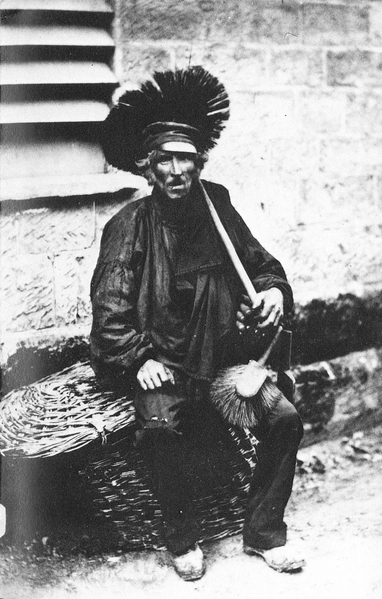
There was an item about my august profession on Radio 4’s Home Truths this morning (listen again). It was fascinating to hear from fellow sweeps, some of whom came from families which had been sweeping chimneys for 200 years or more, the trade being passed on from father to son.

When I’m out sweeping, people are often surprised to find that we still use brushes and rods. This equipment goes back to at least the 1830’s, when laws were passed outlawing the practice of sending small children up the chimney to clean them. Most people know that small boys used to be used to clean chimneys, but they may not be aware of some other methods which were once employed, including dragging a holly branch through the chimney or sending up a live turkey! I have actually met people out in the villages of Warwickshire who remember the holly bush method.

I’m not sure where the idea that, in the words of Dick Van Dyke, ‘a sweep is as lucky, as lucky can be’ comes from. This guy has a few ideas. One story goes back to George II. Apparently, the horses for the royal carriage were going wild on one occasion and the only person who could get them to calm down was a chimney sweep. The lucky sweep idea somehow became connected to the folklore of weddings. It was meant to be lucky to see a sweep, or especially a sweep’s brush popping out of a chimney on the way to the church. At some point sweeps began to be invited to attend weddings, to be in the photographs and to give the bride a lucky kiss as she leaves the church. Many sweeps now advertise this service as a means to supplement their income (although this guy doesn’t seem to actually do any sweeping, just wedding appearances, surely that doesn’t count!) My boss Colin has so far resisted this practice, probably 'cos he's far too busy sweeping. Maybe if I go forward for ordination as a vicar I could play both parts!

Tuesday, February 07, 2006

The Sacraments of Eucharist and Baptism


Here's the third and final piece which I wrote for my vocations adviser:

Here I will give a brief overview of my understanding of the sacraments of Eucharist and Baptism. Once again I am aware that there has been much ink (and blood!) spilled over the nature of these sacraments, and whatever I say here will only touch upon what is a huge subject.
I will begin by my understanding of sacraments in general. I believe a Christian sacrament is a physical action/rite which has been instituted by Christ that when combined with faith is a means of grace to those who partake in it. I do not believe that sacraments are automatically effective, no matter who they are given to, as this idea would seem to be more akin to magic, and could encourage superstition. On the other hand, I don’t believe that they are merely symbolic. When administered correctly, I believe that the sacraments effect what they signify. The key question being ‘what constitutes correct administration?’ (a question which I don’t intend to answer here!). I believe that there is an aspect of mystery to the sacraments (one of the origins of the term) which belies explanation – trying to explain how they work somehow misses the point. Nevertheless, there are depths of meaning and multi-levelled symbolism that are there to be explored.


Eucharist – The Meal Jesus Gave Us

“This is my body, which is given for you. Do this in remembrance of me”

In the bread and the wine of the Eucharist I believe that we meet Christ in a special way. There is a whole spectrum of beliefs as to what is happening in the bread and wine. At one end of the spectrum are the Roman Catholics who believe that the bread and wine become the literal body and blood of Christ in the miracle of transubstantiation, at the other end are the low-church evangelicals who, following Zwingli, believe that the bread and wine are just a remembrance of Christ’s death. I think I fall somewhere in the middle. I believe that when approached in faith Christ is really present in the bread and the wine so that they are to us, in a spiritual sense, the body and blood of Christ.


The Eucharist is of course a remembrance of the sacrificial death of Christ on the cross, and all that it achieved. Each time we partake in it we appropriate once again the benefits of the cross, forgiveness of sins and new life in Christ. It is a thanksgiving (eucharist), and a celebration.
In the same way that the Passover meal remembered the liberation of Israel from slavery in Egypt, the Lord’s supper remembers the New Exodus that Jesus achieved on the cross.


It is more than a remembrance, however. I believe that when we approach them in the right way the bread and the wine of the Eucharist really do feed us in a spiritual sense. They focus our lives on the central facts of our faith and prevent us from drifting off into an unmediated, mystical spirituality.

The bread and the wine are an offering. We take what has been given by God, the wheat and the grapes, we make bread and wine from them and offer them back to God. God then makes them to be the body and blood of Christ and gives them back to us. We eat and give Him thanks! There is a continual, relational interaction between God and us.


“For as often as you eat this bread and drink the cup, you proclaim the Lord’s death until he comes”

The Eucharist is where past, present and future meet for Christians. Each time we celebrate the Eucharist, in the present, we are connecting with the Easter victory of Christ and anticipating the consummation of that victory when He comes in the future. We remind ourselves that we are living in the ‘time between the times’. This passage also tells us that in the symbolic action of the Eucharist, we are actually preaching the gospel in a way that goes beyond words. We are rehearsing the central drama of our faith and finding our place in the story.

There is also a ‘horizontal’ aspect to the Eucharist, Holy Communion. As well as communion with God it is communion with all those who belong to the New Covenant community. It is the family meal. I believe that Holy Communion should be a truly ecumenical celebration. There is one body. It is a tragedy that so often the Eucharist has become a source of division within the church, when the Lord’s table should be the one place that all those who trust in Christ as their Lord and saviour are able to come together. – Story about Vineyard pastors at the Vatican.

There is a sombre warning in 1 Corinthians that whoever eats the bread and drinks the cup should examine themselves to make sure they are not doing so in an unworthy manner. They are to ‘discern the body’. I believe this has a double meaning. Discerning the body as in the death of Christ that it represents, and discerning the body as in the body of Christ the church, and making sure that one has not been a cause of division within that body. Paul even warns that those who don’t discern the body are eating and drinking judgement upon themselves, resulting in sickness or even death! If this is the result of the sacrament being abused, then when it is approached correctly it must bring healing and life.
This presumably has implications for priesthood and who is ‘allowed’ to partake in the Eucharist. Are there occasions when it is appropriate for the priest to deny people communion?


Water Baptism

If the Eucharist is the family meal, then baptism is a sign of entrance into the family. In baptism we are entering the New Covenant community. Baptising people is part of the ‘making disciples’ mandate of the great commission. I believe that water baptism is one part of the nexus of Christian initiation which includes repentance, water baptism, reception of the Spirit and faith in Christ.

I can see several aspects to water baptism.

A new beginning/birth. You enter a family when you are born. In baptism you are entering a new family. John 3:5 talks about being born of water and spirit.

A wash for the dirty. In baptism our sins are washed away and we are made clean.

A burial for the dead. In baptism, our old life is buried and we are raised into our new life with Christ. (Burial would seem to be especially well symbolised by full immersion, although sprinkling of earth does of course happen at burials too!)

Identifying with and being united with the death and resurrection of Jesus. Romans 6:3-5

A public declaration of faith. Baptism is a very public way of declaring our allegiance to Jesus as Lord. We leave behind our old allegiances and pledge ourselves to follow Christ.

A sign of the New Covenant. As with the Eucharist there are connections with the New Covenant. The waters of baptism recall the crossing of the Red sea and the Jordan whereby the people of Israel were delivered from slavery and entered into their inheritance. Some also see a replacement of the old covenant sign of circumcision with the new covenant sign of baptism.

Some of these aspects seem more appropriate to the baptism of believers. What about the baptism of infants?

There are historical understandings of infant baptism that I struggle with. For Augustine, and many following, the doctrine of ‘original sin’ meant that unbaptised infants who died were hell-bound, and therefore by baptising a baby you were giving him or her a better chance of salvation. This seems to portray a rather bizarre view of God, in my opinion, and would seem to be little more than superstition. I am much happier with a ‘covenantal’ view of infant baptism. I believe that the children of believers are to be considered full members of the new covenant community, and it may therefore be appropriate to give them the sign of this fact. (Incidently, I also believe this is an argument for giving these children communion –question: at what age may children be confirmed/take communion?)) Given my stated understanding of a sacrament – a means of grace, when combined with faith – in the case of the baptism of believers children, the faith must be ‘by proxy’, expressed by the parents on behalf of the child. Question - in the case of unbelieving parents presenting a child for baptism, where is the faith? Is it in the priest, or the church members, or both? Or is the actual presenting of the child seen as a step of faith on behalf of the parents?


Much more that could be written but once more time has defeated me, and I’m sure there’s more than enough here to discuss!

Monday, February 06, 2006

catching up

Ok, so somehow nearly 2 months has passed by since my last blog. How did that happen? To ease myself back into it here's a few photos :


This one was taken at Perranporth beach on the day of Jamie's dedication down at Truro Vineyard just before Christmas. It was a special day, made all the more poignant by the knowledge that his Dad (my brother-in-law) Karl had just been called up to go to Iraq. He goes out with the Auxiliary RAF for 3 months this summer.


We spent a nice and quiet Christmas down at Su's mum's in Yateley. We then went over to Su's dad's for a couple of days where we actually got some snow. It was only a couple of inches but enough to make everywhere look nice. I wanted to stay there 'cos we never get any snow in Coventry. (I can completely understand Michael bemoaning the blandness of English winter weather, where is the harsh winter we were promised?)


Just after New Year we went for a walk in the Berwyn hills with our friends Steve and Siobhan. For our North American friends, here is a stone circle which is probably around 4000 years old.

Monday, December 12, 2005

Ordination and Priesthood

Here's a little piece I rattled off for my vocations advisor about my understanding of ordination and priesthood:


Over the last few years I have given considerable thought to the nature of leadership within the church and particularly the question of ordained public ministry. Here I will attempt to give a brief overview of the development of my thought and my current understanding of ordained ministry. I will begin with some of my initial reservations, then look at my current understanding of the ‘doing’ and ‘being’ of priesthood. I am aware that there are huge debates over the nature of priesthood, leadership and authority within the church, and many books have been written on the subject. I will offer here a brief personal reflection based on my limited current understanding which will inevitably only scratch the surface of a huge subject.

Initial Reservations

When I began my theology degree, 3 years ago, I began to examine the concept of ordained, full time ministry. Within the Vineyard movement to which I belonged there was a strong emphasis on the ‘equipping of the saints’ for the work of ministry. The role of leadership was to help people to discover their own gifts and release them within the church and the world to use those gifts for the mission of God. I was and am a firm believer in the priesthood of all believers and was therefore nervous of the concept of a special class of ‘priests’ who might be considered to be ‘super-saints’. Didn’t we all have access to God now through our man in heaven, our great high-priest Jesus Christ? Did we need a set of intermediaries to act as a go-between for us and God? Wasn’t the idea of priesthood a resurrection of an old covenant category?
I was concerned about a divide between clergy and laity whereby the clergy are expected (by themselves or others) to perform the real tasks of ministry and the laity are basically passive recipients. I also felt that is was unrealistic to expect one person to combine the roles of pastor, teacher, evangelist, administrator, worship leader etc, etc.
I now see that most of my reservations came either from a faulty understanding of Christian priesthood or from (real or perceived) historical abuses of that role.

My Current Understanding

I began to realise that despite my egalitarian tendencies, God does “set apart” certain people in order to serve the church. Initially I thought in pragmatic terms. Someone needs to prepare services, and pray for people and pastor them and visit the sick etc, etc and if these things are going to be done well, then it is better to have some people who are dedicated to the tasks. I have seen how difficult it is for people to be bi-vocational and feel that they are not able to do either job to the best of their ability. I am still suspicious of a one-man band model of priesthood and feel that part of a priest’s role must be to be a facilitator, someone who equips and enables others to live out their calling within the church and the world.

I like what Archbishop Rowan Williams says about the role of priests in forming communities:

“Communities, in spite of the sentimental way we sometimes think of them, don’t just happen. They need nurture, they need to be woven into unity (more of that in a moment). If the unity of the Church is not that of a mass of individuals with a few convictions in common but that of a differentiated organism where the distinctiveness of each is always already in play, then for the Church to be consciously itself, it needs people to see and show how diversity works together. Sometimes this is a role of active co-ordination, drawing out gifts and deploying them, sometimes it is helping some people see that what others do is bound up with what they themselves do.”(1)

Many people are suspicious of an authoritarian, hierarchical structure of leadership whereby there is a ‘chain of command’ a bit like an army, although I don’t believe the Church of England really operates this way, it is sometimes perceived to. In contrast to this I prefer the picture of a conductor of an orchestra as a model of priesthood. The conductor’s job is to know the piece of music inside out, (which includes being familiar with the composer), so that he can hear how it should sound in his head. The players can look at him in order to know when they should come in and how loud to play etc. He must then listen to the different instruments that are playing and conduct them to play together so that they make a beautiful sound and not a cacophony!

I have come to see that in addition to the ‘pragmatic’ side of priesthood (what a priest does), there is also an ‘ontological’ aspect to priesthood (what a priest is). God “sets apart” men and women to be certain things within the church, these include :

A servant. First and foremost, an ordained minister, whether a deacon or priest, is called to be a servant. He or she is a servant of God, a servant of the church and a servant of those in the parish in which he/she ministers. Jesus’ footwashing of the disciples is the obvious model which springs to mind. Not that a priest is to be a doormat who is always at the beck and call of everyone in the church, but for a significant amount of his/her time they are to be “available”, available to God and available to others. The only kind of authority which is appropriate within the church is that which is administered with humility.

A priest is called to be a witness who through his or her words and life is a symbol within the community of what the whole community is called to be. People should be able to learn more of the character and mission of Christ by observing the priest. This is indeed a high calling! It is one in which failures are inevitable, otherwise the priest would not be human. Nevertheless, the priest is called to watch their life and doctrine closely. A priest within the Church of England is not only a symbol within the church, but to all those in his parish who are not necessarily members of the church. He thereby represents not only Christ, but the church as well.

A person of prayer. As Michael Ramsay wrote, a priest is ‘to be with God with the people on our heart’(2). A priest is called to a life of prayer. Prayer for all those within his/her care and prayer to sustain his own relationship with God out of which he/she ministers. This again is extremely challenging and is an area that I know I need to grow in.

A minister of the Word. A priest is called to dwell within the biblical story from creation to new creation, so that it shapes their entire worldview, and so that they can make it come alive to people in a fresh and exciting way and show people their place within the story. They are called to preach the gospel in all its glorious fullness.

A minister of sacrament. A priest will stay close to Christ through the eucharist and will administer and help people to understand this sacrament. He/she also has the privilege of baptising people into God’s church. I must admit this is one area where I need to gain a deeper understanding of the priest’s role. Having enjoyed the breaking of bread with friends in people’s homes on many occasions I am yet to see why only an ordained minister can ‘preside’ over this celebration. It is probably in order to protect the ‘specialness’ of the Lord’s table, and not want it watering down, but I am convinced that a priest is not meant to be a ‘policeman’ of the table. I also still need to deepen my awareness of baptism as a sacrament and the priest’s role in this.

This is only really a start and there is much more that could be said. I look forward to reading around the subject and increasing my understanding of Christian priesthood.

1. R. Williams, ‘The Christian Priest Today’: Lecture on the occasion of the 150th anniversary of Ripon College, Cuddesdon, Fri. 28th May 2004 - http://www.archbishopofcanterbury.org/sermons_speeches/2004/040528.html
2. M. Ramsay, The Christian Priest Today’, SPCK, London, 1972, 14

Meeting Place

On a Tuesday night, Suzy and I help out at a community meal held at the Salvation Army building in town called 'meeting place'. The aim is to provide a place where people can come for friendship, conversation, a cheap meal and an evening in out of the cold. I think I blogged about it before - here, here, and here. Anyway, here are some photos of one evening. It looks like a bit of a quiet one, but usually we have between 40 and 50 guests.

Monday, November 28, 2005

My Journey of Faith and Calling


Here's the piece I wrote for my vocations adviser to tell him my story.

Background

I was born into a Christian family in 1974. My paternal Grandma was a lifelong Anglican and my maternal Grandparents were Methodists. Upon moving to Nuneaton after their marriage, my parents joined Manor Court Baptist church which was the church that I grew up in. Although I cannot remember a time when I didn’t believe, I made a prayer of commitment, ‘giving my life to the Lord’, at the age of nine. I had a quiet but serious, childlike faith, being fully involved in Sunday school, bible studies and the young peoples’ fellowship. I was baptised at Manor Court Baptist shortly after my fifteenth birthday.

In my later teens however, and especially upon going to university, I allowed my faith to take a bit of a slide. I found the Christian Union to be cliquey and never really settled into a church. Although I never stopped believing, my lifestyle didn’t really match up to what I claimed to believe. I had a lot of ‘fun’ during this period, but on the inside I was hurting. I felt hypocritical and directionless.


Coming home

A major turning point came in 1997. During this year I had the opportunity to take two trips which were to be very significant. The first was to Israel. As I visited the various holy sites, staying in the old city of Jerusalem and spending time in the Galilee, I was reminded of the reality of the historical events upon which our faith is based. I began to think seriously again about my own life and beliefs. The second trip was to California. My uncle had invited me and (my then girlfriend) Su to go and stay with him in Simi Valley, Los Angeles. He had one condition on us staying with him – that we attended his church while we were there. Bearing in mind that Su wasn’t a Christian at this point, and had never been to church, I was not exactly enamoured with the prospect of going to a 4000 strong, American Pentecostal church. Not only that, but I knew that my Uncle was involved in the ‘healing and deliverance’ ministry of his church, what I at the time considered to be the lunatic fringe. I feared that this visit could put Su off Christianity for the rest of her life!

I needn’t have worried. We visited several meetings, and sure enough, weird and wonderful things happened. We experienced powerful times of worship, heard people praying in tongues, testimonies of healings and were given words of personal prophecy which hit home. But rather than being put off, Su was intrigued and wanted to know more. Over the period of 3 weeks we both felt God speaking to us in various different ways. I knew I had some serious repenting to do, and Su began to take an interest in the claims of Christ and the things of God for the first time.

When we got back to England I knew that the first thing we had to do was find a church to become a part of. The following week I was walking on the University of Birmingham campus when up walked some strangers offering me a free chocolate bar as a small token of God’s love for me. Never one to turn down free chocolate I accepted their gift and a card which explained that they belonged to South Birmingham Vineyard church. We visited the church the following Sunday and have never really looked back. The next week Su heard the gospel preached and made a commitment to Christ. We were both incredibly excited at what God was doing in our lives.

At the time the Vineyard church was exactly what I needed. The times of sung worship were heartfelt and intimate, with a strong sense of God’s presence. Here was a group of young people, all around my age, who were passionate about Jesus and real with each other. They were down to earth, non-religious and didn’t take themselves too seriously. They also believed in ‘doing the stuff’ and that ‘everybody gets to play’ to use two of John Wimber’s phrases. These people didn’t just talk about healing the sick, they prayed for people and expected God to heal. They didn’t just talk about God speaking to us today, they listened to Him and attempted to follow what they heard him saying. They went out onto the streets of Birmingham and befriended the poor and helped to feed and clothe them. They literally ‘practiced’ what they preached. We got fully involved with the life of the church, joining a ‘kinship’ group, helping to lead an Alpha course and serving on the church’s ministry to homeless people.

My coming back to God was so powerful and life changing. I truly felt like I had been given a second chance, a fresh start. I vowed that I would serve God for the rest of my life, going wherever he wanted me to go and doing whatever he wanted me to do. It was at this time that I began to feel that perhaps God was calling me to serve Him vocationally and that this wouldn’t necessarily be within the electronic and software engineering field that I had trained for.
I also felt I had some catching up to do in terms of my knowledge of the bible and theology. Being an avid reader I explored the theology of the Vineyard movement thoroughly. Amongst other aspects, I found their understanding of the ‘now’ and ‘not yet’ of the Kingdom of God, as espoused by George Eldon Ladd to be incredibly helpful.

Church Planting

When Su and I got married in 1999, we were faced with a decision – to remain in Birmingham as a part of the large and established South Birmingham Vineyard church or to move to Coventry, where I was working, to get involved with a new church plant. Although we were not too keen on the idea of moving to Coventry to start with, God spoke to us both in a number of ways over several months leading us here. As part of a new church plant it was a case of ‘all hands on deck’, and we soon got involved in various forms of ministry within the church including leading worship, leading small groups, running Alpha courses, servant evangelism, preaching, teaching and being part of the core leadership team. Church planting has had its ups and downs, its joys and frustrations, with many mistakes made and lessons learnt. Over the course of the last 6 years the church has grown from a core of around 6 (of whom we were 2) to around 75 people.

After 2 or 3 years of working as a software engineer I was becoming increasingly dissatisfied with my job. At first I was able to cope with it by seeing my real purpose as church planting and my day job as a kind of ‘tent-making’ role, which paid the bills and enabled me to do the church stuff. It became clear over time though that I couldn’t see myself being a software engineer for the rest of my life.

When the company’s fortunes took a downturn and they started to offer voluntary redundancy I thought this might be an opportunity to explore a different direction. We initially looked into doing some short-term overseas mission for a year or so. I applied for redundancy but was turned down as I was considered to have a key role in the project I was working on. Frustratingly, all of the doors I pushed on in terms of going away turned out to be closed. I persevered at work for another year or so, all the time thinking and praying about what God might want me to do. I eventually realised that what I wanted to do more than anything was to go and spend some time at bible college to get a deeper theological grounding. I applied for voluntary redundancy and to Birmingham Christian College and this time was successful with both applications. The idea was to go and do a year studying theology and use this year as an opportunity to explore my calling.

Calling

I loved my first year at bible college. Not only was it an immense privilege to be able to immerse oneself in God’s word, I found the academic study of theology to be intellectually and spiritually stimulating. During this year I had an increasing sense that God might be calling me into a full time ministry along the lines of a pastor/teacher. I guess at first I was waiting for a ‘bolt out of the blue’ voice from God to confirm my calling, but rather than receiving this I just had a growing desire to spend my life ministering the word of God and the love of God to people, helping them to grow as disciples of Jesus. I remember being struck once as I read 1 Timothy 3:1, ‘If anyone sets his heart on being an overseer he desires a noble task’. I realised that I was setting my heart on that task and that this itself could be God’s way of calling me, rather than waiting around for ‘Road to Damascus’ type experience. I also remember sitting in the canteen one time and being moved to tears as I considered what an amazing privilege it was to serve God and people in this way. I had some initial reservations about ‘ordained’ ministry, however. Being a firm believer in the priesthood of all believers and ‘every member’ ministry, I was concerned that having paid, ordained ministers could perpetuate a divide between clergy and laity whereby the clergy are expected to do the ‘proper’ ministry and the laity becomes increasingly inactive and nominal. Nevertheless, I saw that both Christ and Paul taught that ‘a worker deserves his wages’ and I came to see that an ordained minister could be a symbol of what the whole people of God should be.

One year of bible college became two, which then became a full three year degree. I really enjoyed my college work, especially New Testament studies, which has become something of a passion. I managed to attain a 1st class honours degree, something which I trust will stand me in good stead for my future ministry.

Church of England

Upon telling people that I am joining the Church of England and pursuing ordained ministry within that church I have received puzzled looks from some people. Why would someone leave a growing, exciting church that is full of young people to join an institution that is (in their opinion) staid, outdated, formal, bloated and tearing itself apart (and some of these voices have been from members of the CofE!)?

It began around 4 years ago when I started to read Tom Wright, who is now Bishop of Durham. As well as being one of the most exciting New Testament scholars in the world, he is also one of the best apologists for the Church of England. Time and time again, when he has said ‘in the tradition to which I belong we…’ he has gone on to say something which has made such a lot of sense and has really resonated with me. I began to notice certain things that had perhaps been overlooked or thrown out of some of the newer churches including the Vineyard movement.

I have felt an increasing sense of wanting to feel connected to both the historical church and the wider body of Christ, what might be called the communion of the saints. As Protestantism has become increasingly fragmented, with more and more denominations, movements and splinter groups, it is easy to lose sight of the wider church and to feel somewhat isolated and free-floating. My understanding of the Church of England is that, whilst obviously having a significant point of departure in the post-reformation period of Tudor England, it had no creeds of its own, only those of the united Church of the first five centuries.

Another area where I have felt drawn towards certain aspects of the CofE is in worship. Whilst I have loved the songs of the Vineyard, there comes a point when one is left wanting more within a worship gathering. Informality can become an idol just as much as ritualism can, and the pressure to be spontaneous can end up feeling restrictive. Paradoxically, I have found the use of liturgy to be freeing and powerful. I have seen how the use of the church calendar and the lectionary can be used to find one’s place within the Christian story, helping a community to look at the different aspects of Christ’s life and the whole biblical story rather than focusing on a few key texts. I have also had an increasing sense of the importance of the eucharist within worship and have found this to be celebrated in a profoundly meaningful way within several CofE settings.


I believe that the public nature of the Church of England, being the state church, whilst obviously presenting it’s own problems, also presents huge opportunities for the mission of God. Whether through local schools, community events or rites of passage it would seem to have outward-facing possibilities that many churches don’t have. I used to be concerned about the ‘establishment’ aspect of the CofE but have noticed that it hasn’t stopped Archbishop Williams from speaking out on the Iraq war and that it may present opportunities to speak out on matters of social justice that smaller ‘independent’ churches don’t have.

The Vineyard movement in the UK actually has some strong links with parts of the Church of England. When Wimber first came over in the 1980’s it was largely with Anglicans that he hit it off e.g. David Watson and David Pytches. In some ways I see parallels with the Methodist movement, like Wesley (the lifelong Anglican), Wimber never intended to start a new denomination in this country but believed in renewing the existing church. Whilst many Anglicans left and joined new Vineyard fellowships there were many that stayed and are now involved in some of the most thriving CofE congregations e.g. St. Andrews, Chorleywood, St. Thomas Crookes, Sheffield, Holy Trinity Brompton, St. Aldates, Oxford etc etc. The New Wine network and conferences, Soul Survivor and Alpha are all examples of the relationship between the Church of England and Vineyard theology and praxis.

On the other hand, many within what gets called ‘the emerging church’ are dissatisfied with certain aspects of the modern church and are looking to explore older spiritualities whether Catholic, Eastern Orthodox or Celtic. I believe the Anglican church may be ideally placed to provide the deeper spirituality and holistic worship that people are hungry for.

There is much more I could say about my journey towards Anglicanism and my desire to pursue ordination. I am not one for moving churches, let alone denominations, on a whim and have given this move significant thought and prayer. Obviously there is only so much one can appreciate from the outside and I look forward to continuing this process within the Church of England.
I am not unaware of the tensions and challenges that the Anglican communion faces, but I actually believe this may be an exciting time for the church, and with people like Rowan Williams, Tom Wright and John Sentamu around I am hopeful for the future.

Sunday, November 27, 2005

church stuff

Coventry Vineyard has been encouraging recently. After what seems a long time of being around 20 people and wondering if we will ever be more than 20 people (not that there is anything wrong with being a church of 20 people), this term we have regularly had upwards of 60 people at our Sunday gatherings, with new people every week. It is getting difficult to keep up with all the new people who have been coming along. We have 3 growing housegroups, none of which are led by us, having recently handed over our group to Pete and Hayley. The church is getting involved in lots of outreach projects, spending the first Sunday of each month doing church on the streets, picking litter, raking leaves, doing peoples gardens as well as our recent housegroup decorating project and a winter sunshine children’s party. Coventry Vineyard has recently teamed up with St. John’s Westwood church for a combined 24/7 prayer initiative in the month of November. People have been praying around the clock, 24/7 (well, almost), for four weeks. Awesome stuff, and very exciting to see what God is doing. So, the question is, why are we moving on?

For some time now, probably since I began studying for my theology degree (and reading Tom Wright) I have had - what I call - ‘strange yearnings’ for aspects of the Anglican church. To some people this might seem like a strange move, but to me it feels like it has been growing inside for a while and it makes a lot of sense. Combine this with an increasing sense of being called into full-time, vocational ministry, and I have decided to explore and pursue ordination within the Church of England. Yes, I want to be a vicar! To this end, we have been attending Holy Trinity in Coventry and I have started the ball rolling in the long process of applying for ordination. Obviously such a huge decision is not to be rushed and, the church of England being what it is, there is no chance of that. I have been meeting with a ‘vocations advisor’, the Rev’d John Burrell a vicar in Lighthorne. He is a wonderful man, and has been very receptive of where I’m coming from. Yesterday, Su and I were confirmed at Coventry Cathedral with 200 other people between the ages of 8 and 80. It was an awesome service which is worthy of a blog of its own. This evening we helped out with a ‘darkness to light’ service for the start of Advent at Holy Trinity, a truly EPIC service which is also worthy of it’s own explanation blog. In short, big changes are afoot which are both exciting and a bit daunting. Next, a little piece I had to write for my vocations advisor about my journey so far.

Sunday, November 20, 2005

Catching Up

Wow, where did those three weeks go? Busyness has conspired against me blogging once again. We have had a hectic, but fun few weeks. Since Su's birthday weekend, we have had about 1 evening in. So what have we been up to?

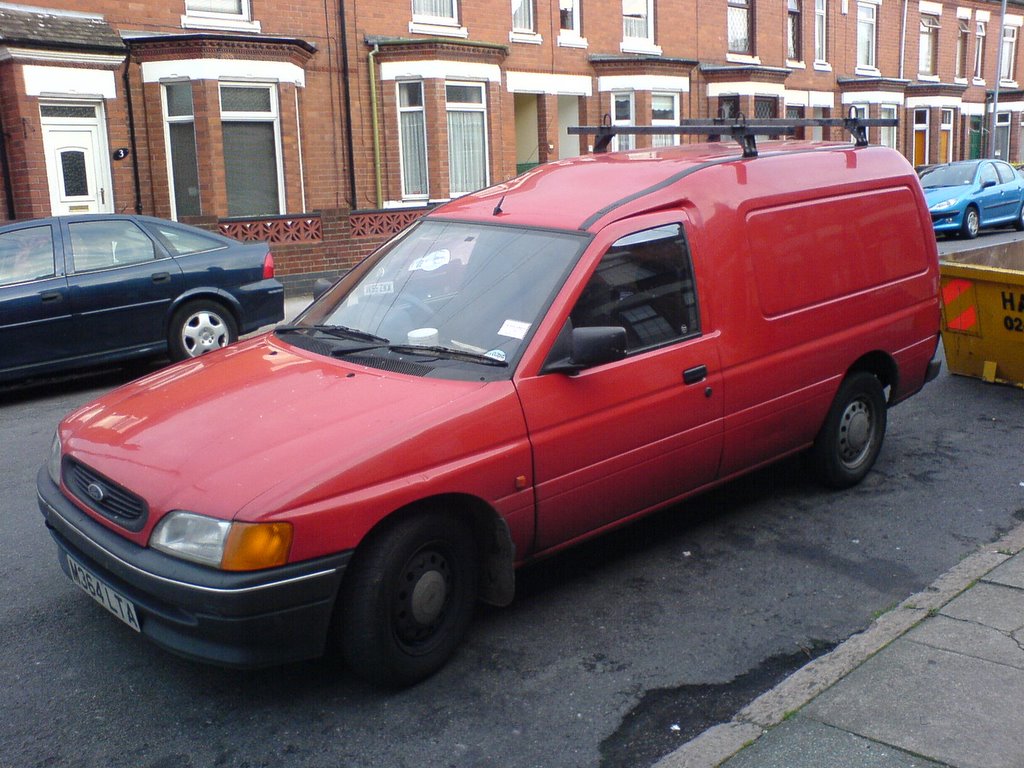
Firstly, there are my day jobs. I continue to work for Professor John Hull over at the Queen's Foundation in Birmingham. I enjoy this work, if you can call it work. I basically help John out around the office, reading his paper mail, writing documents, doing a bit of research, either on the internet or in the library and making his coffee. It's hardly taxing, and it gives me time to think and read as well. It is an amazing experience to work with someone so brilliant and I enjoy the challenge of engaging with someone who is coming from a very different theological standpoint to me. My other job is also very enjoyable, but couldn't be more different. Two years ago, I worked as a chimney sweep as a summer job. I honestly think it is the most fun job I'd ever had. When I went back to college, the work kind of fizzled out and I lost touch a bit with Colin, the sweep. In my recent jobhunting, (with some nudging from Su), I decided to email Colin on the off chance that he had any work on. I got an email straight back saying that it was amazing timing, because he had just that day been awarded a new council contract, and was scratching his head trying to think how on earth he could cope with the workload. So for the last couple of months I have been bombing around the villages of South Warwickshire in a little red van, and have swept 165 chimneys! I love it. I get to meet lots of people, from all walks of life, living in council houses or mansions. I do real work, which keeps me fit and gives me a nice warm glow in my muscles at the end of the day. I see some of the nicest parts of the country that are on my doorstep, and I get to drink lots of cups of tea. It's flexible work, and pays reasonably well. It is the ideal thing to do while I explore the next stage of my life, more of which later.

"Chim-chimney, chim-chimney, chim chim cheree, a sweep is as lucky, as lucky can be". I'm available for weddings by the way.

Next - what's going on with us, churchwise.

Saturday, October 29, 2005

su's birthday weekend

Just a quick blog from the Apple store on Regent's Street. We are in London to celebrate Su's birthday, and amongst all the girly shops that we are required to go to, I get to come here to keep me happy. This afternoon I am taking Su to watch The Lion King which should be fun. Better be off now

Monday, October 24, 2005

Blogging Friends

A couple of weeks ago we had some new friends over to lunch. Michael Pahl is finishing of a PhD at Birmingham University, he also has a New Testament sudies type blog here. He is also teaching the gospel of John at my old college, BCC, a bit like Michael Strickland, the first anglo-file, who now blogs here (yes, that is what he really looks like) and who introduced us. Michael came over to Coventry on the train with his wife Larissa and his kids Matthew, Michael and Amelia (they have an official family website here (and I find it hard to keep one blog up to date!). The Pahls are from Alberta, Canada which is one of my favourite places on earth (especially Banff, where I would give my right arm to live). Now, Canadians, like all North Americans, are easy to please. You just show them some old stuff. Like buildings that are 7 or 8 times older than their home town, stuff that we Brits walk past everyday without batting an eyelid. Anyway, Michael has written up his trip in a much more interesting and informative way than I ever could here. It was fun to have his family over for lunch and get to know them a bit. We are hoping to be able to take them to Oxford or somewhere at some point in November.
Not wishing to indulge in national stereotypes but I'm yet to meet an unpleasant Canadian. They're the Americans it's ok to like. (only kidding, Strickland). Michael (Strickland) speculated that they are 40% American(US variety), 30% English and 30% unique but I wouldn't dare say they are that high in US content. I definitely wouldn't say that they talk like Americans, spell like Brits and smell like nothing else, which Strickland also said (and told me to tell you, Michael P).

Another friend, Doug, has started blogging here. If it's anything like his real life verbal diarrhea he will be quite prolific but fairly insubstantial. So far it's been quite quiet though. He is, however, doing better than my brother-in-law, whose token effort at blogging was frankly pathetic.

Thursday, October 13, 2005

My iBirthday

On the 1st October I celebrated my 31st birthday. How scary is that? Well, not as scary as I found my 30th. I seem to remember dreading the day and then going into a depression for at least 2 weeks after my party. Looking at the archives it looks like I didn't blog for about 2 months (ok, nothing unusual there). Well I've got used to the being old thing and this year was a lot easier to cope with (although Su did accuse me of going through a mid-life crisis when I bought a pink shirt for my birthday meal).

The blow of getting another year older was softened somewhat by the present I bought myself, a 60GB iPod. Now, before anyone accuses me of being an extravagent consumer, the only reason I was able to get one was due to some inheritance money I received when my Grandma died a couple of months ago. For about 5 minutes, a thought about doing something sensible with the money, like paying off some of the mortgage, but Dad told me to get something I really wanted. So I did...it's what she would have wanted! The opportunity of my sister going on a trip to New York was just to good to miss. I course, whenever you by an Apple product, they come out with a new version a couple of weeks later. Oh well, I'm chuffed to bits with mine. Most of my other birthday presents were related to this little white box of tricks. Su bought me a docking station, Rachel and Karl bought me a case and I bought an AV cable with some money from Mum and Dad - so I can bore people to death with slideshows on their own TVs. An extra special treat came courtesy of Su's mum and Geoff. Geoff phoned me a couple of days before my birthday to ask if I could pick him up an iSight camera for him. I was planning to go on my birthday anyway to pick up some accessories so it was no problem to get him one. When I took it to him, he wrote me a cheque and handed me back the iSight and said Happy Birthday! (a joint birthday present with su). I had no clue. Now I can have video iChats with my sister and anyone else who wants to see my ugly mug whilst talking to me, tres cool.


'Every good and perfect gift comes from above' James 1:17. Now all Apple products fall somewhere between good and perfect, the iPod is nearer the latter... so thankyou Father, and everyone else, for my pressies, sometimes I think I must be the most blessed person alive.